Driving 'The Beast' through Africa (and the Middle-East)
Journey Home
by Isabelle Demaeght, February 8th, 2026
Like the west coast of Saudi Arabia, Jordan was not on our original itinerary. We don't really like driving in a straight line, but now I have to navigate without a paper map of Jordan. We're a bit old-school in that respect, or is there already a foldable tablet with a screen measuring 100 by 100 centimeters?
We end up in Wadi Rum almost immediately. This valley, known as the Moon Valley, is located in the southwest of the country and is surrounded by impressive sandstone and granite rock walls. With an area of approximately 720 square kilometers, it is the largest wadi in Jordan. Wadi Rum is a popular tourist destination. Bedouin tribes who lived here—and still live here in part—have made a living from this attraction. Scattered throughout the area are numerous camps: some luxurious and comfortable, some simple and austere, all housed in tents.
It is winter. The air is crisp, almost sharp, and the quiet instantly reveals that this is not high season. At the entrance, however, we are almost immediately approached by the few guides hanging around here, bundled up in warm clothes, waiting for business. We buy a ticket that allows us to stay for 24 hours.
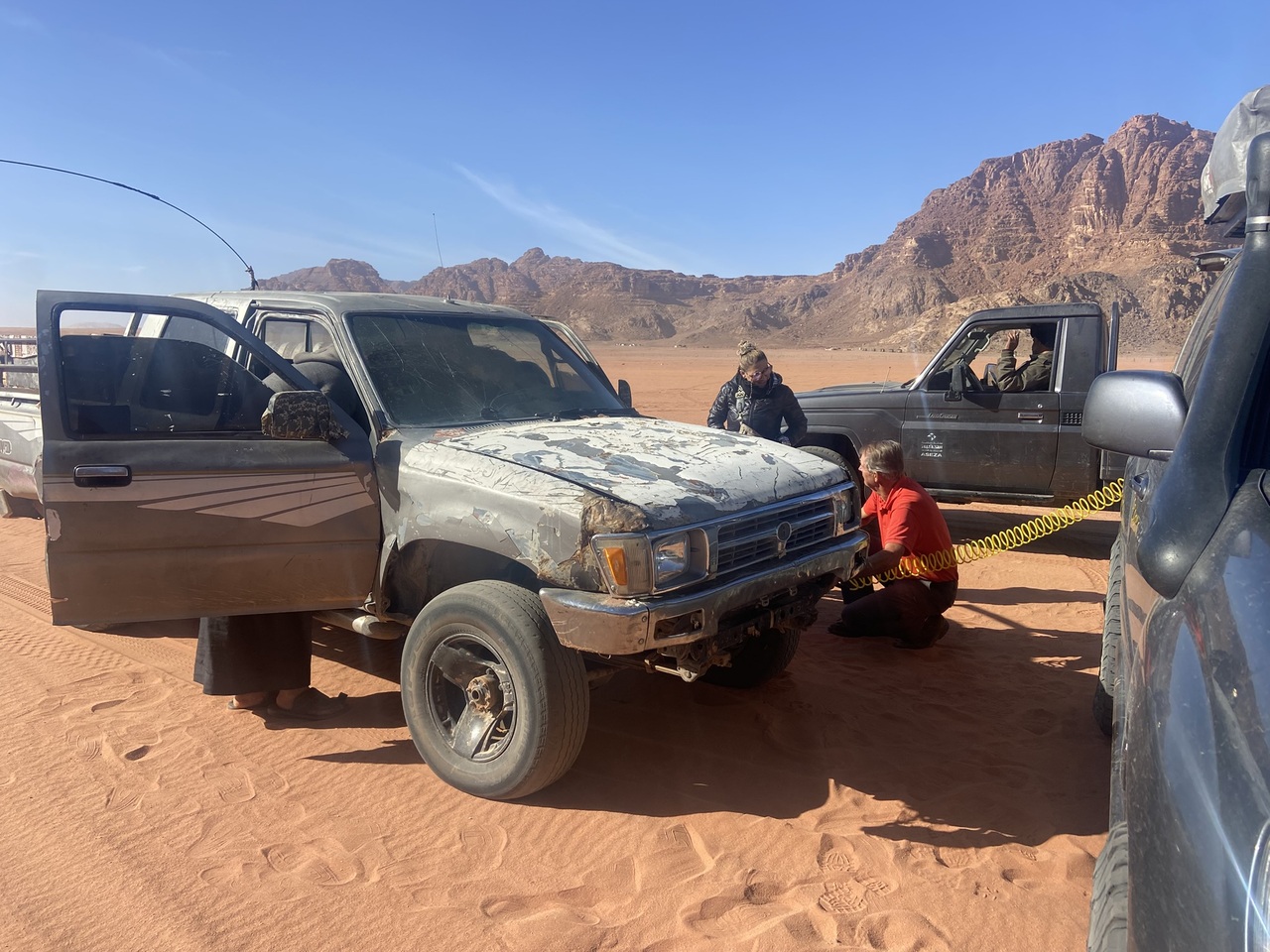
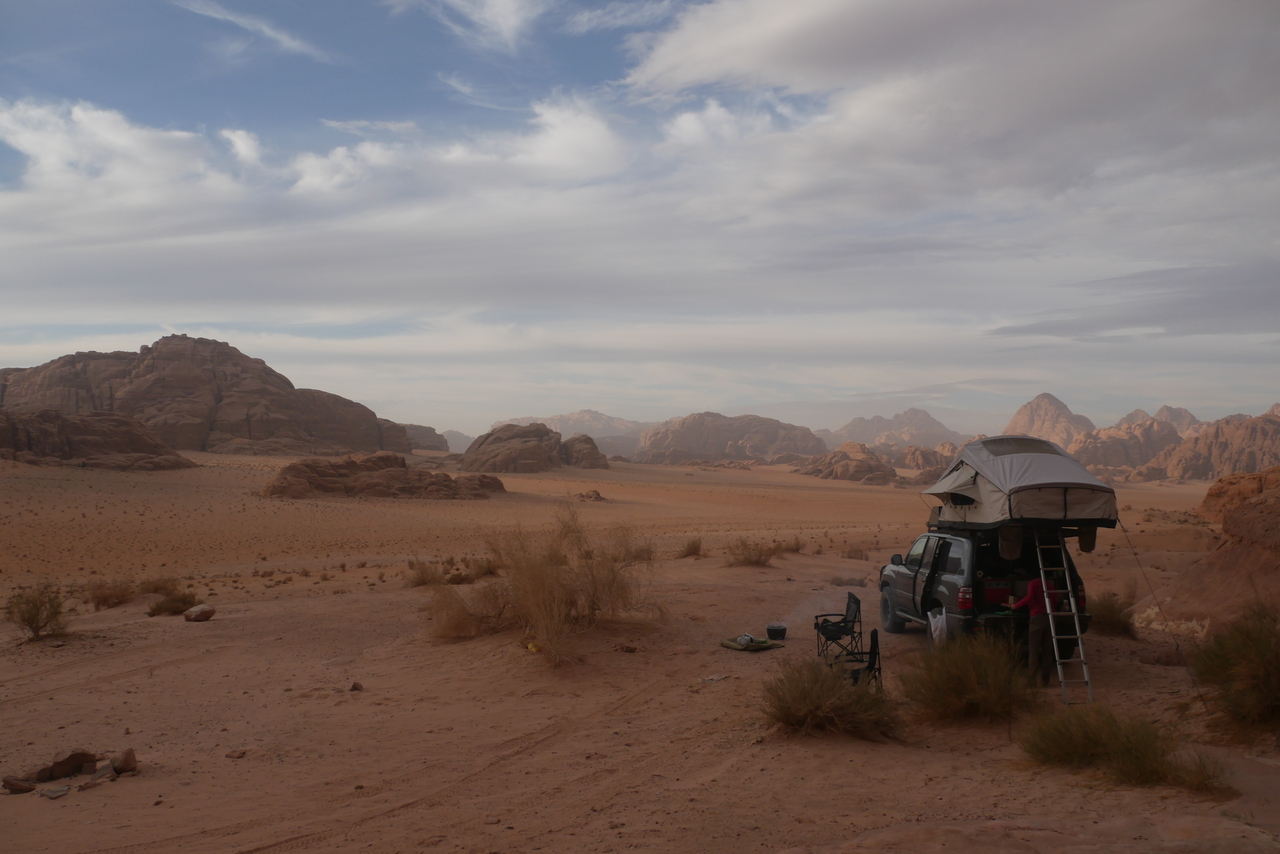
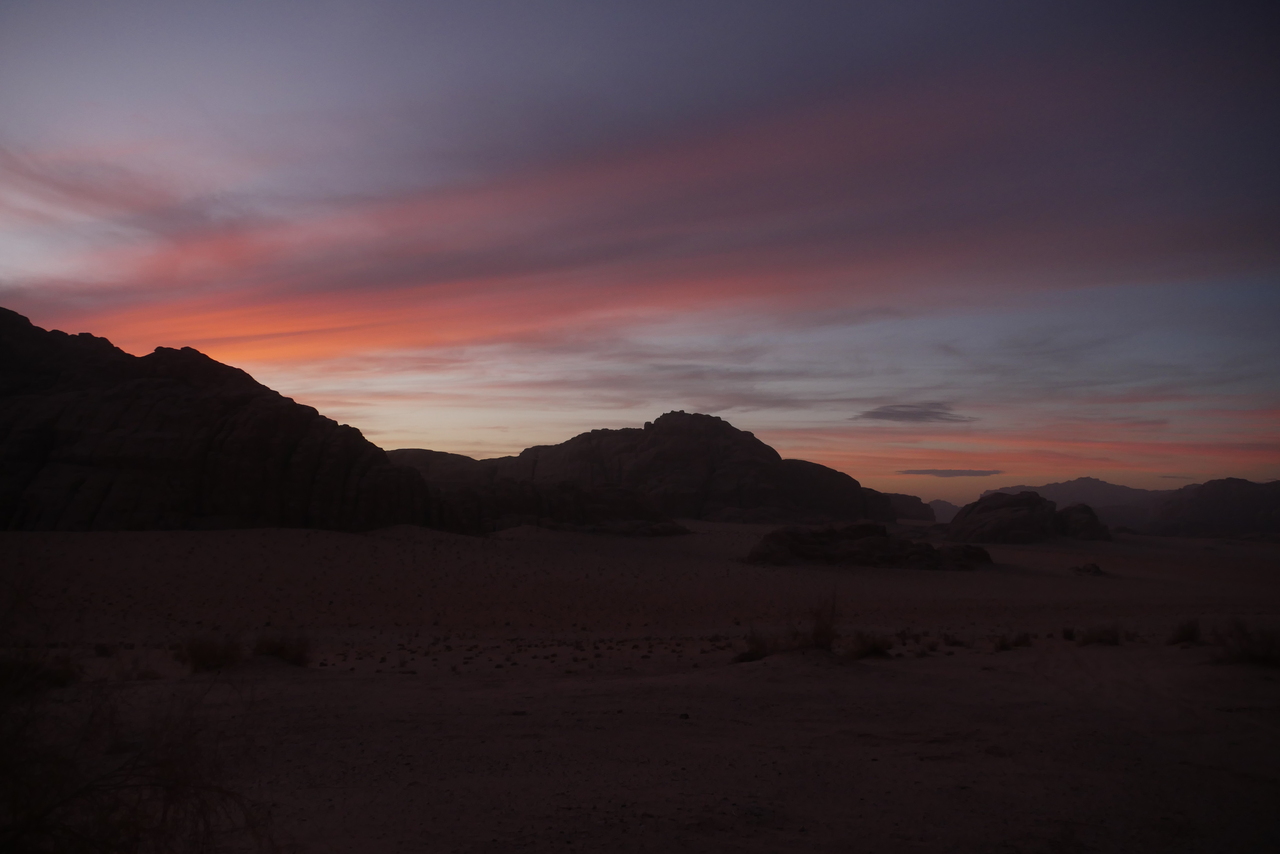
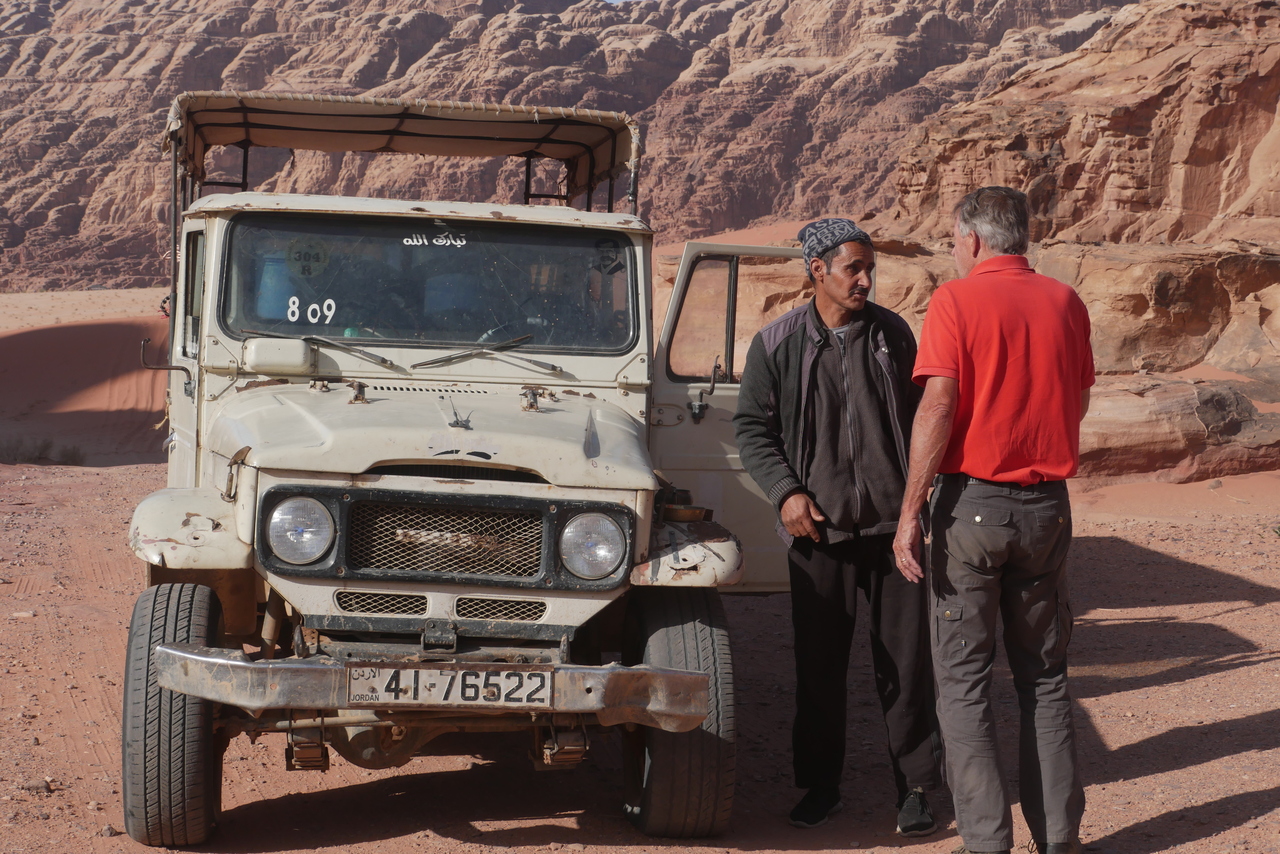
We have barely started driving in the sand when Adriaan suddenly stops. One of those Bedouin guides, who earns some money by driving two freezing Italians around in his ancient Toyota, has broken down. The Beast's compressor and a tire plug ensure that the tire stays inflated. Then a beaming Adriaan lets The Beast loose: up the sand dunes, controlled but playful, the engine growling low beneath us as the sand slides away under the tires. After a day of driving around, we spend the night somewhere in the Wadi – all alone.
Then it's time for Petra. A name that sounds like a promise. According to Adriaan, an absolute must-see: if you're in Jordan, you can't possibly skip this place. I remain cautious for a moment – too big, too well-known, too many photos already seen. Besides, we have already seen Hegra (built by the same people). We start in the (informative) Petra museum and the next morning, after a chilly night of camping, we take our first steps into the hidden city.
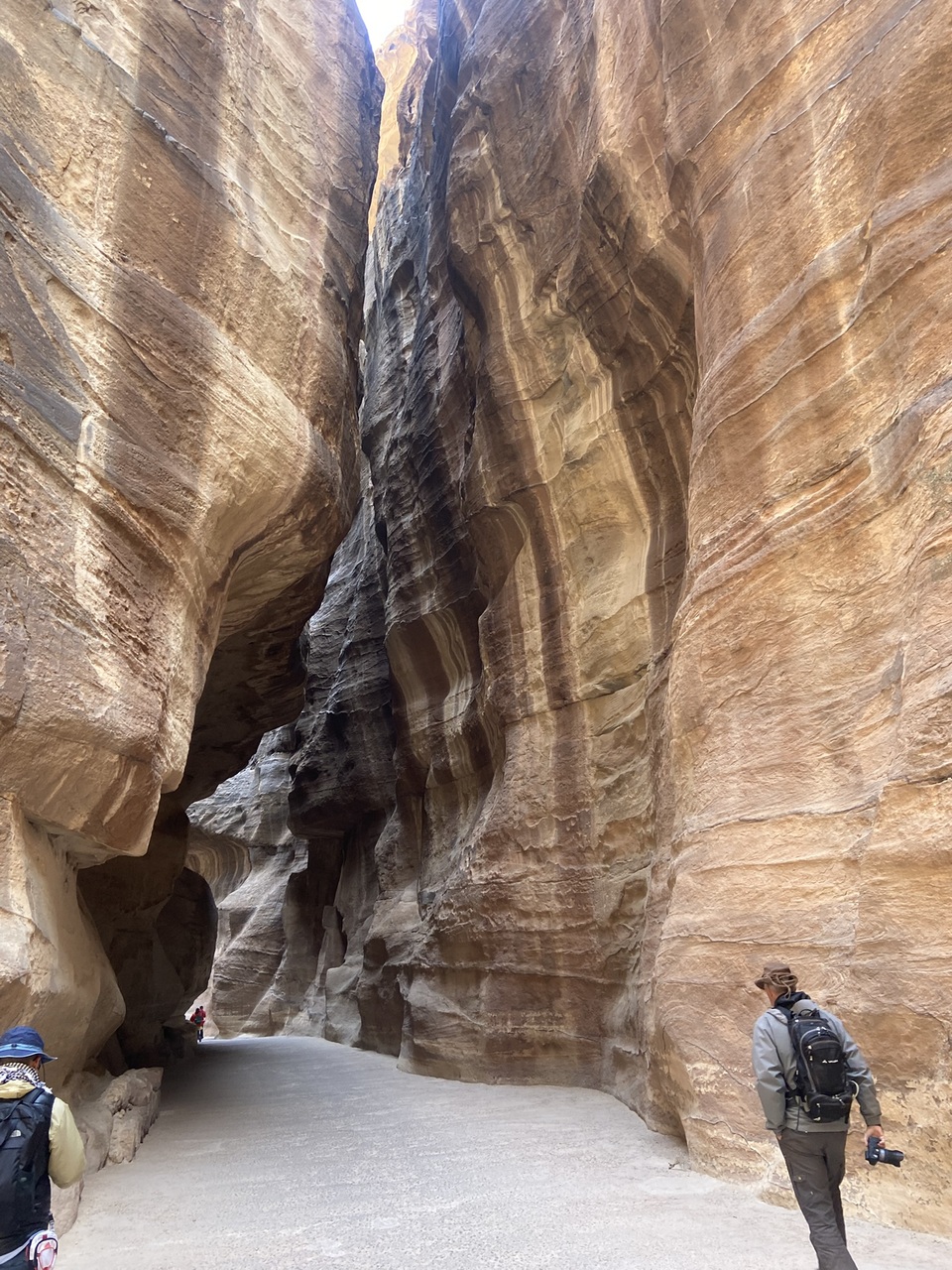
Petra is steeped in history and was declared one of the seven wonders of the world in 2007, although that label seems superfluous here. You walk through a narrow valley; the rock walls slowly close in around you, the light becomes thinner, softer, almost tangible. And then, suddenly, the space opens up. Before you rises Al Khazneh – a treasure chamber with a tomb carved out of stone, monumental and fragile at the same time. An image that easily lodges itself in your memory.
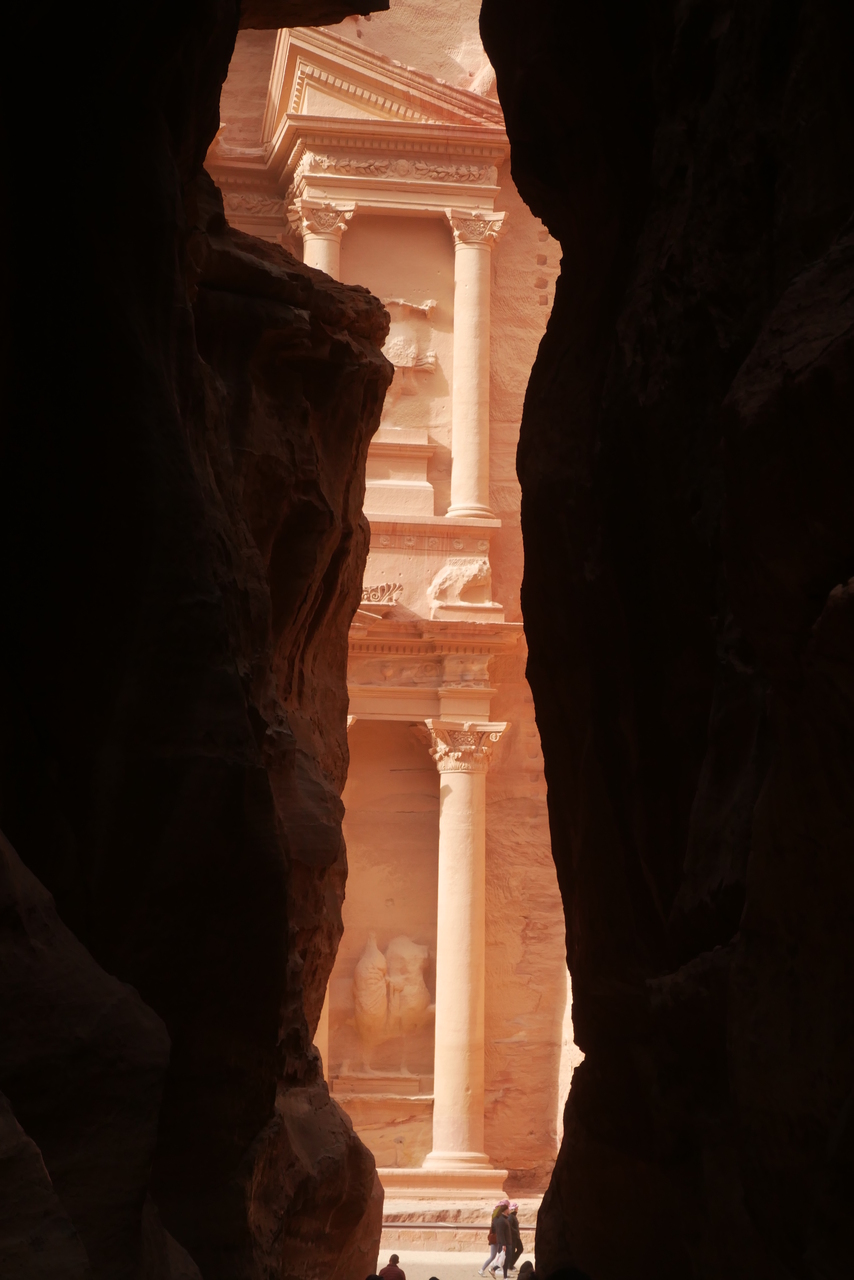
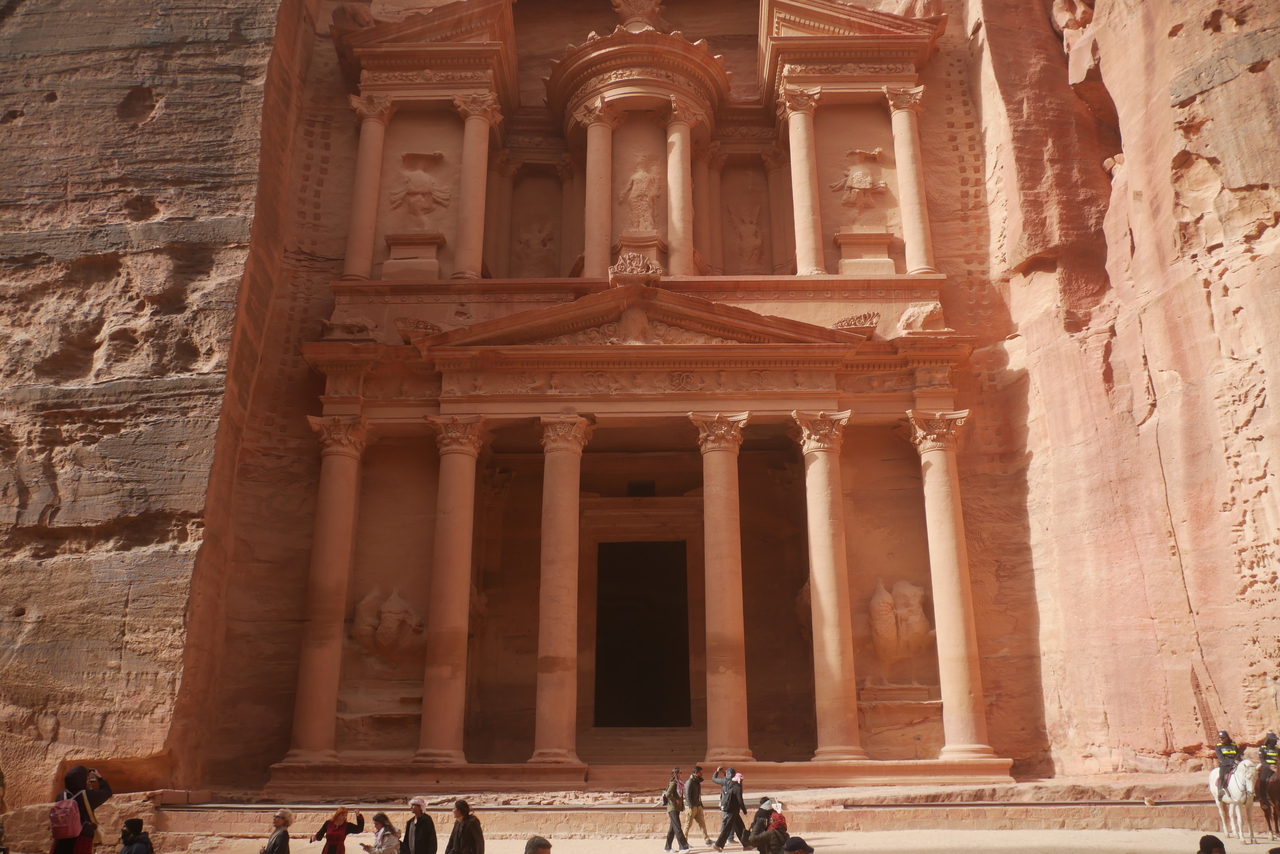
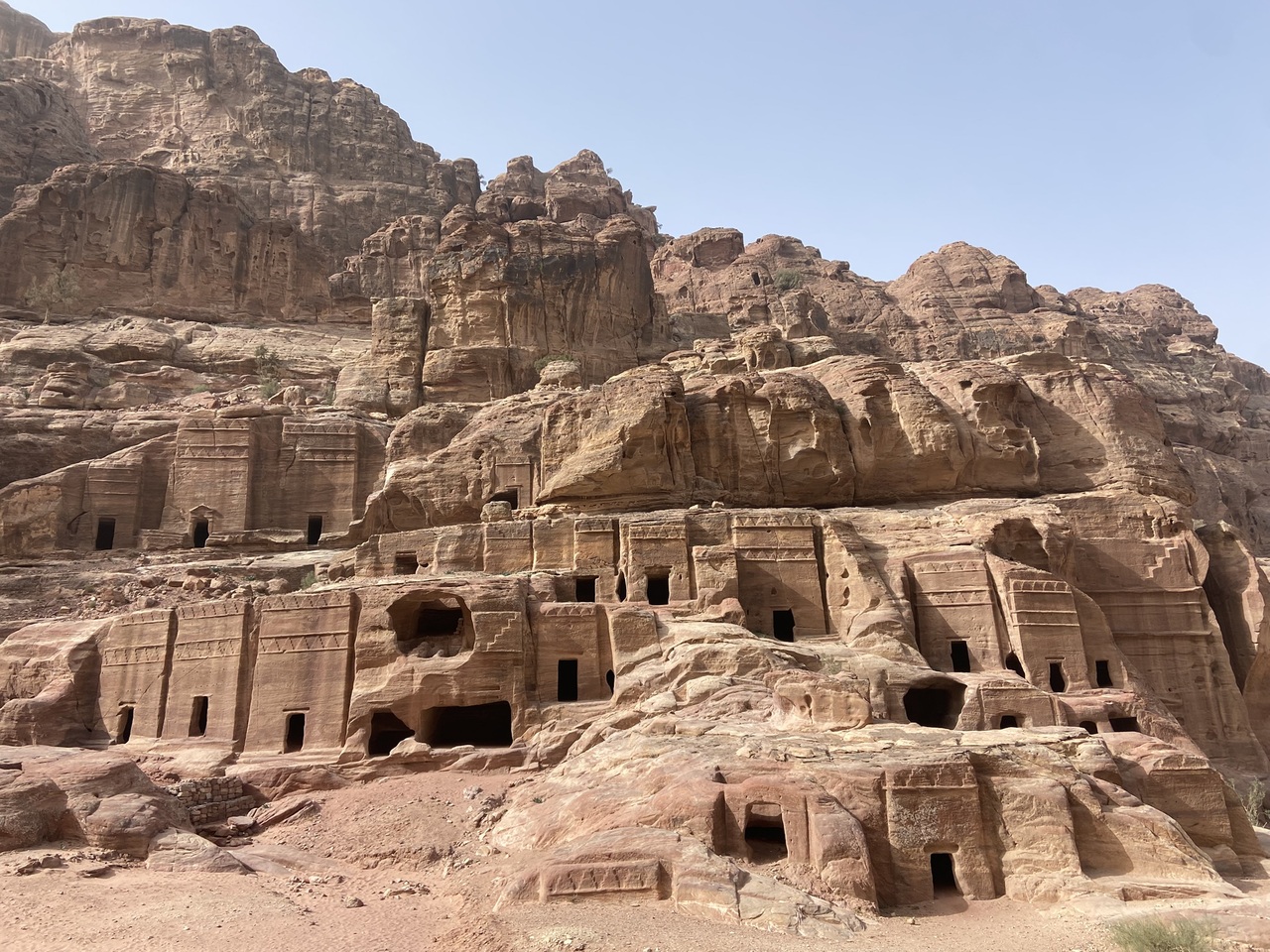
It is just one of many tombs known since 1812, when a Swiss explorer (re)discovered them. Since then, archaeologists from all over the world have been digging here in the rocks and sand, layer after layer, story after story, with a patience that seems almost infinite. Every detail tells its own story: the treasure chamber(s), the sophisticated irrigation system with ceramic water pipes, the interplay of stone and landscape.
Here, too, the low season is making itself felt. There were numerous warnings—about too much tourism, about pushy traders—but today they lose their validity. The cold creeps around your ankles, slowly and inevitably, but the crowds stay away. No masses, no hustle and bustle. Just space to look, to stand still, to be silent. This place demands silence—and today it gets it.
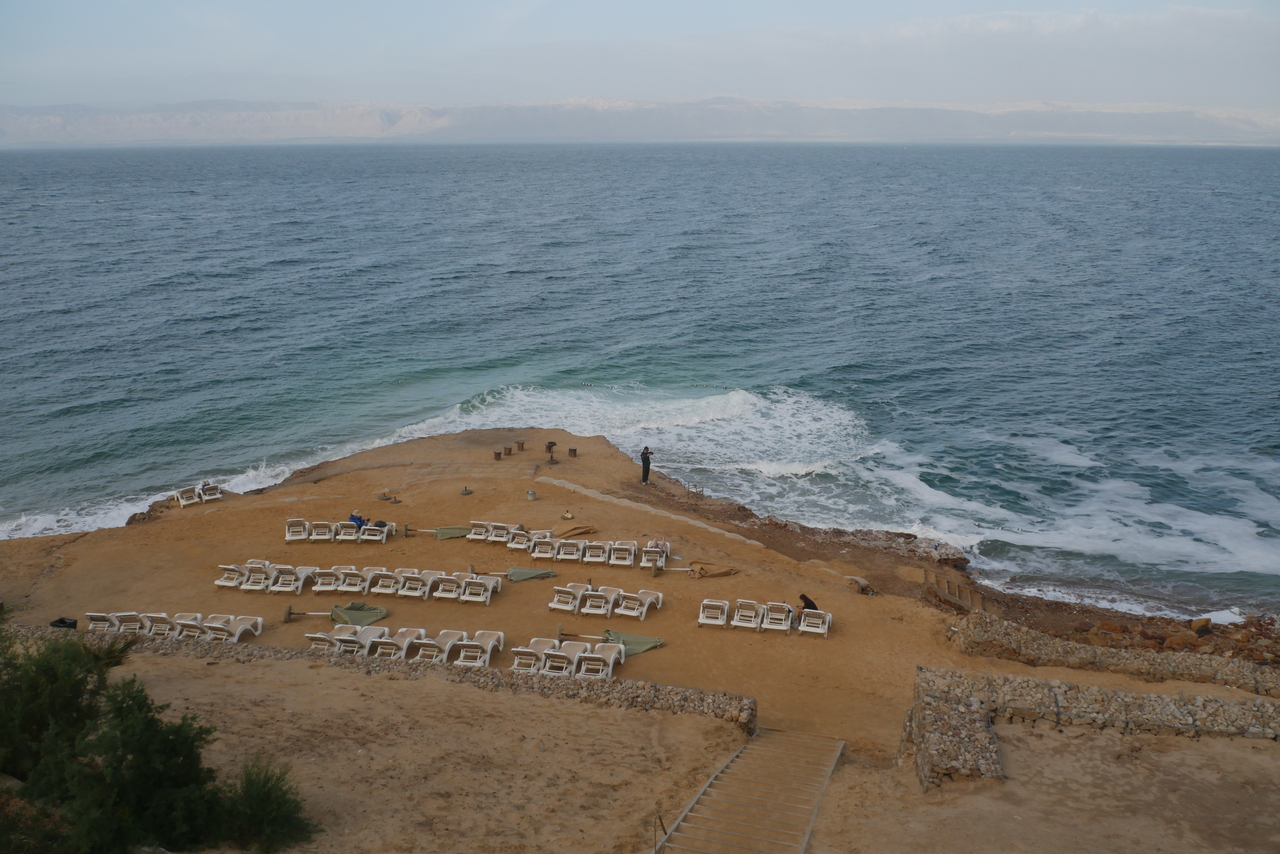
I had hoped to float in the Dead Sea. We decide not to go camping because it is very windy. Our hotel is located on the water, but swimming is impossible: too many waves, strictly forbidden. In the evening, the lights of Jerusalem twinkle in the distance, the border is guarded everywhere; its presence is unmistakable.
We spend our last night in Jordan at a truck stop. There is a large restaurant with a buffet (truck drivers are always very hungry). We sleep in a parking lot between buildings that shelter us a little from the wind. Not romantic, but it will do for one night.
The border crossing into Iraq deserves the title: “Exercise in patience.” There is bureaucracy to the extreme: data copied onto forms is entered into computers that do not communicate with each other by officials who do not know each other. Adriaan handles most of it and is sent from pillar to post. Just when everything seems to be settled (after four hours of formalities), one piece of paper is still missing. Back to square one.
The road to Baghdad is long, monotonous, and empty. Only the wrecks along the side of the road, the blocked bridges, and the constant presence of police and army break the monotonous silence. They see us coming from afar and wave friendly. But the uniforms, machine guns, and armored cars give me an ‘unheimliches Gefühl’.
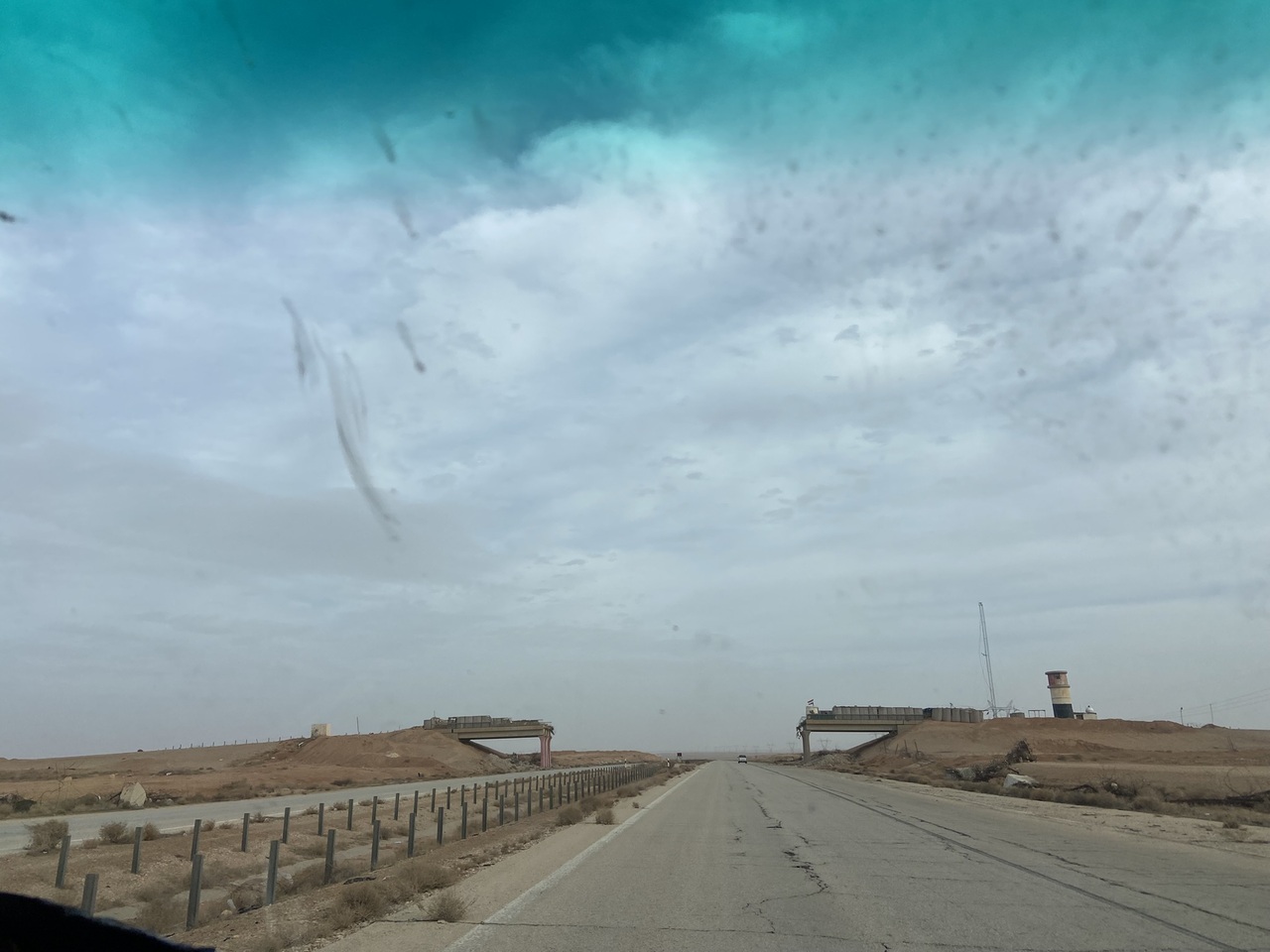
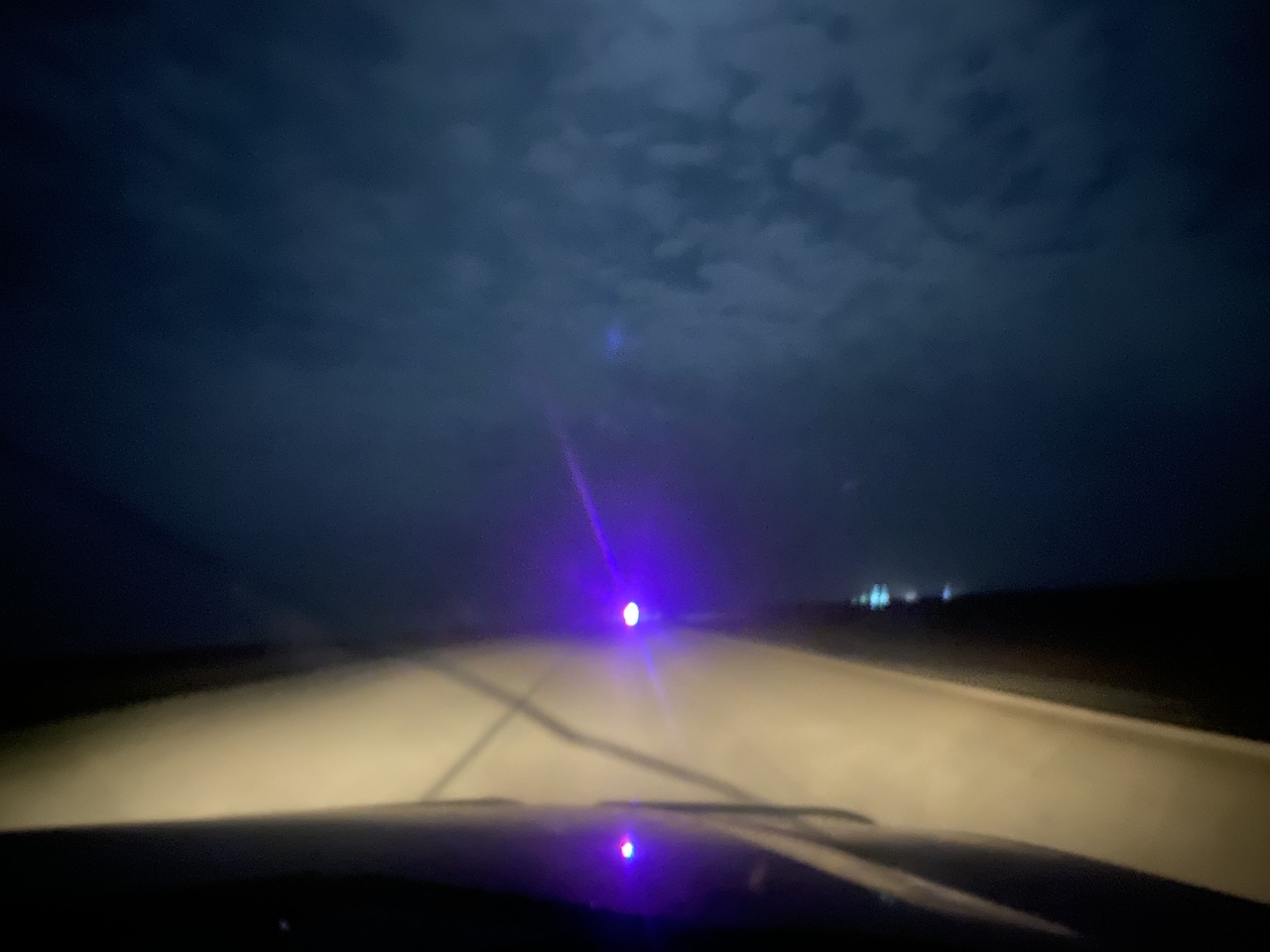
We pass five checkpoints. Each time, someone has to call to check whether “the Belgian car” is known. At the sixth checkpoint, the procedure changes: as darkness falls, the police do not want us to continue driving ourselves. Escorted by a police car with flashing lights, we are taken to a fortified post. The Beast is starting to resemble its namesake! We are allowed to sleep in the parking lot under the watchful eye of the night guard.
They look for police officers who speak some English or German. They insist that we eat something in their canteen: a meal is prepared for us. We eat a rich, steaming soup, bread, rice with stewed mutton. Meanwhile, we are surrounded by a dozen chatting officers. (What could they be talking about?) Adriaan then enjoys a hot shower; I decide to skip it. The sanitary facilities don't look like they've been cleaned in a while. In the morning, we are also given breakfast and 20 (!) bottles of water for the road.
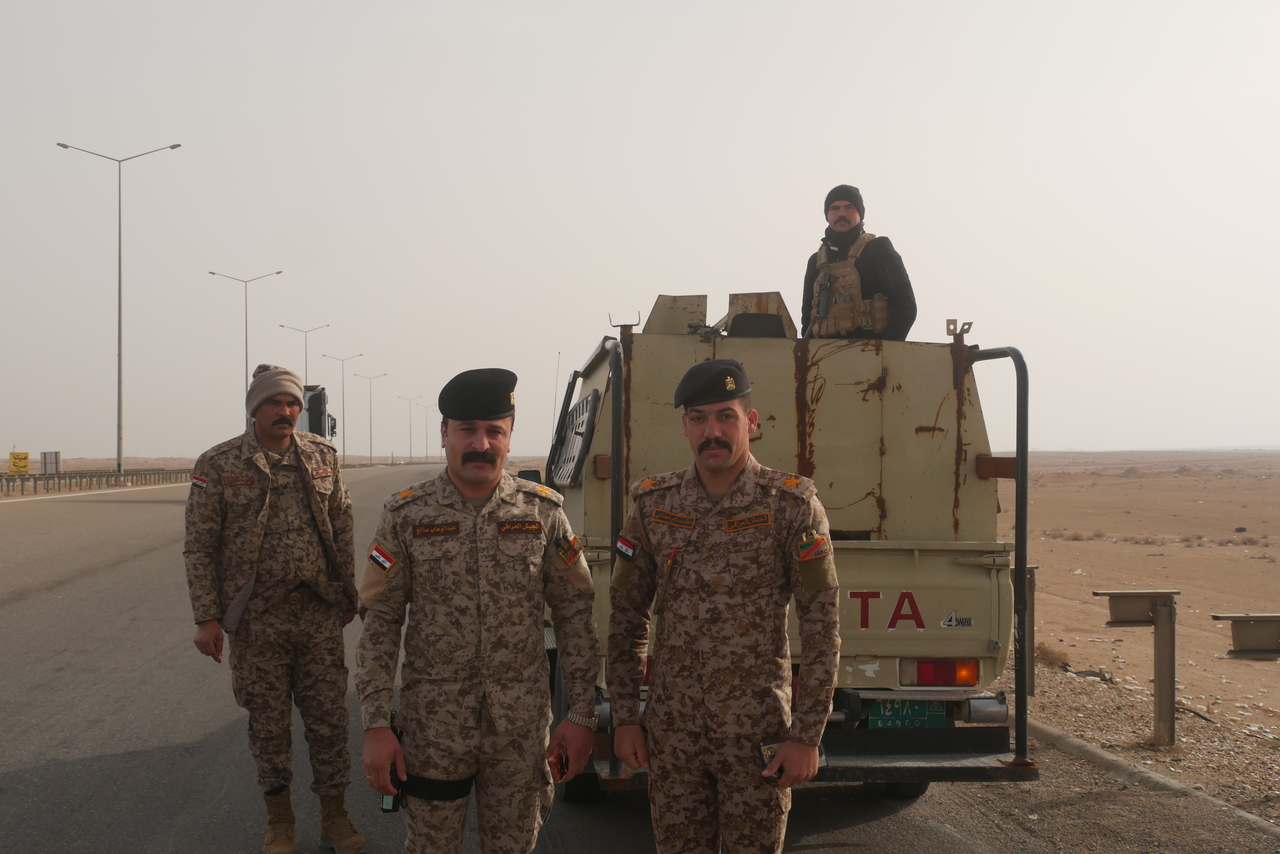
We continue driving in convoy. Friendly Abdullah is driving, and the commander of the bureau is also with us. He does not wear any insignia on his uniform, but at every checkpoint we pass, we are greeted with a stiff salute. In this country, signs of authority are not always visible, but they are immediately recognizable. It becomes a relay of escorts by the army: a soldier drives, a non-commissioned officer leads, and in the back of the pickup truck, a soldier stands behind an armored machine gun.
Baghdad is like most of the cities we visited: chaotic. Horns honking everywhere. Drivers do whatever they want, run red lights, take up space that isn't there. Still, we reach Ur Plaza without any problems, a hotel owned by an Iraqi who lives half the time in Germany. Little remains of any “deutsche Gründlichkeit” in his lodgings; the hotel has many shortcomings.
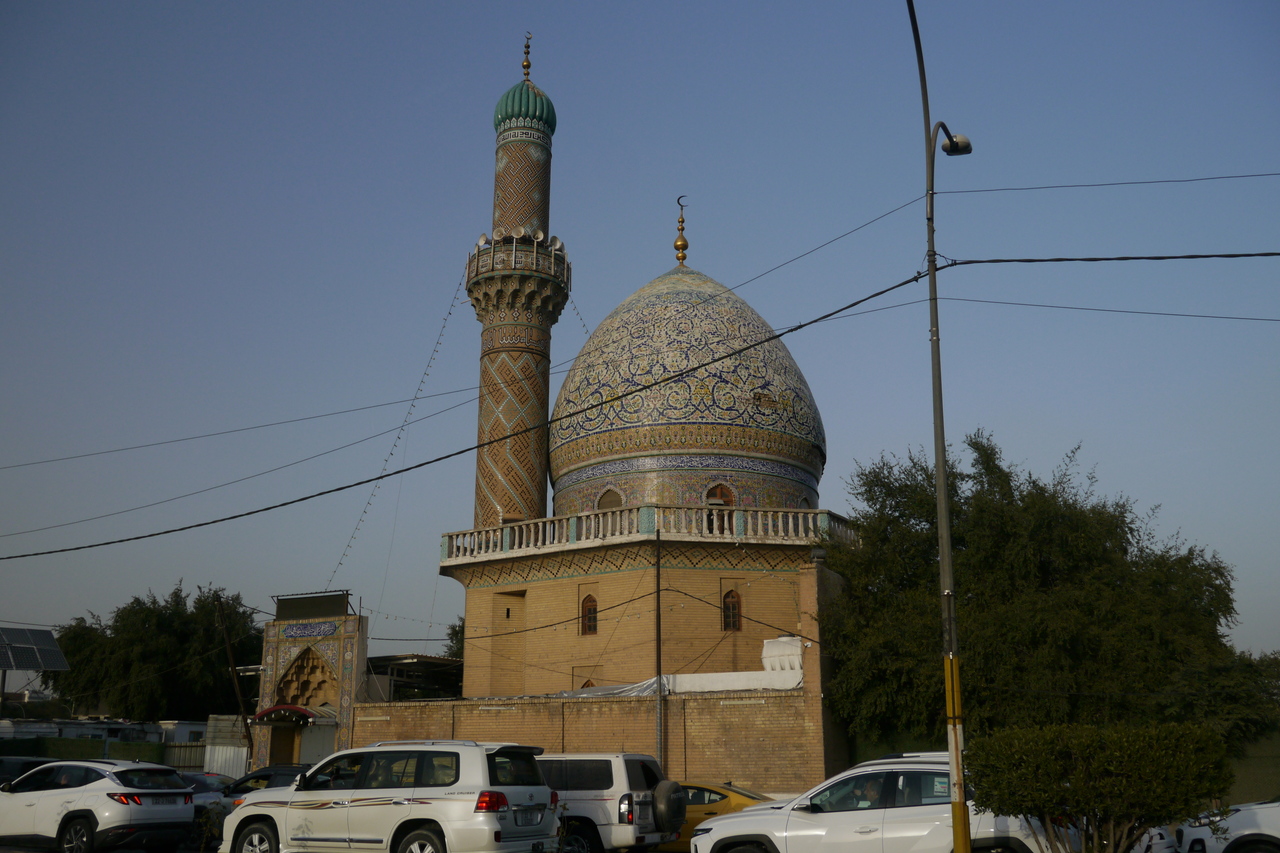
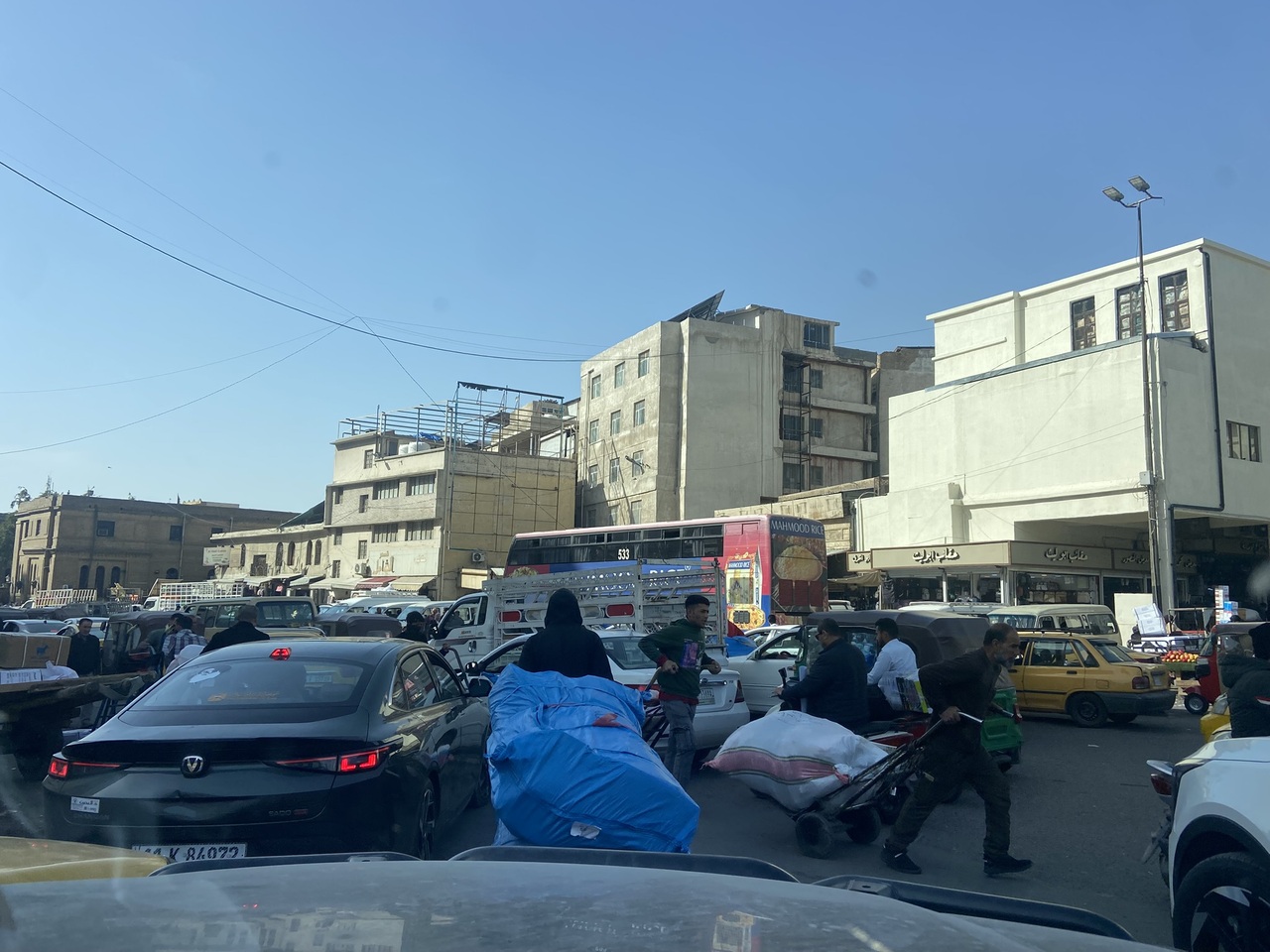
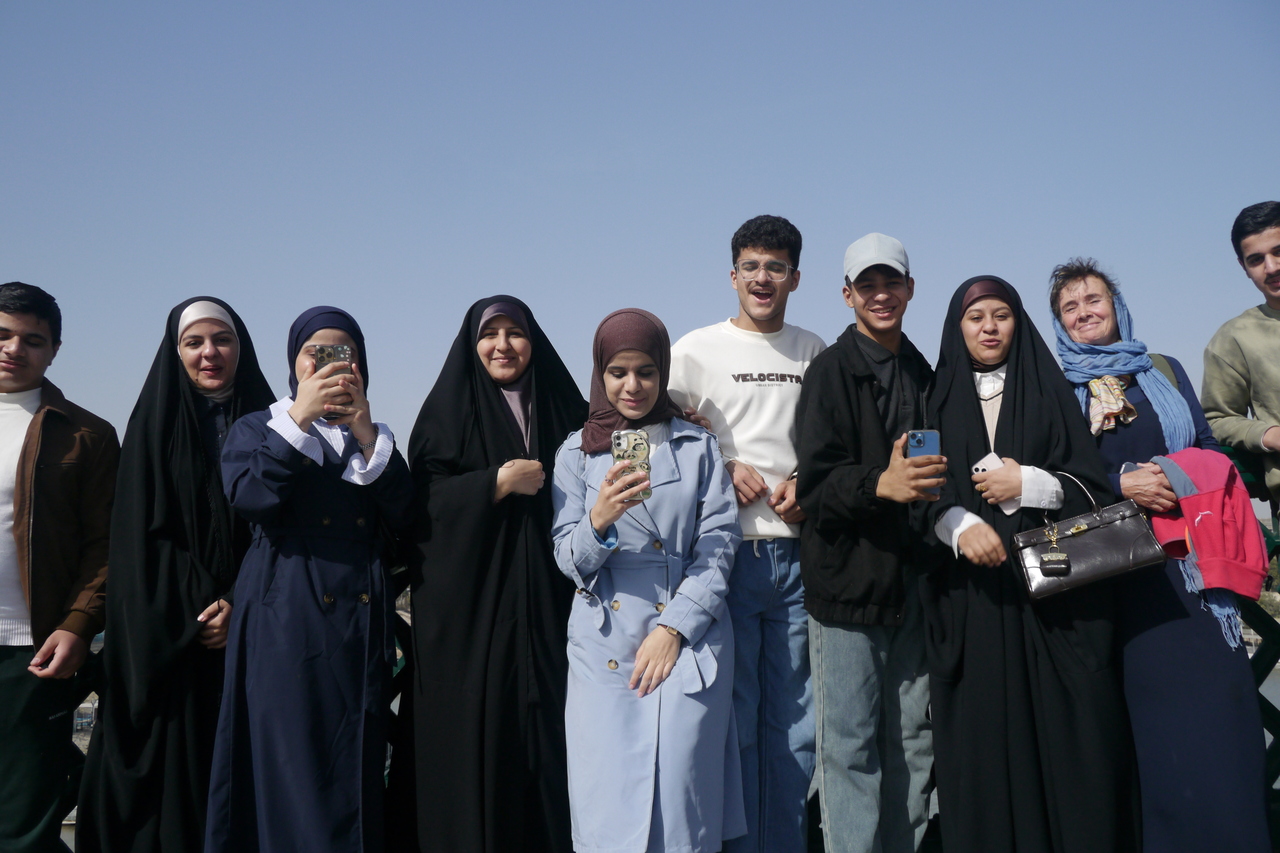
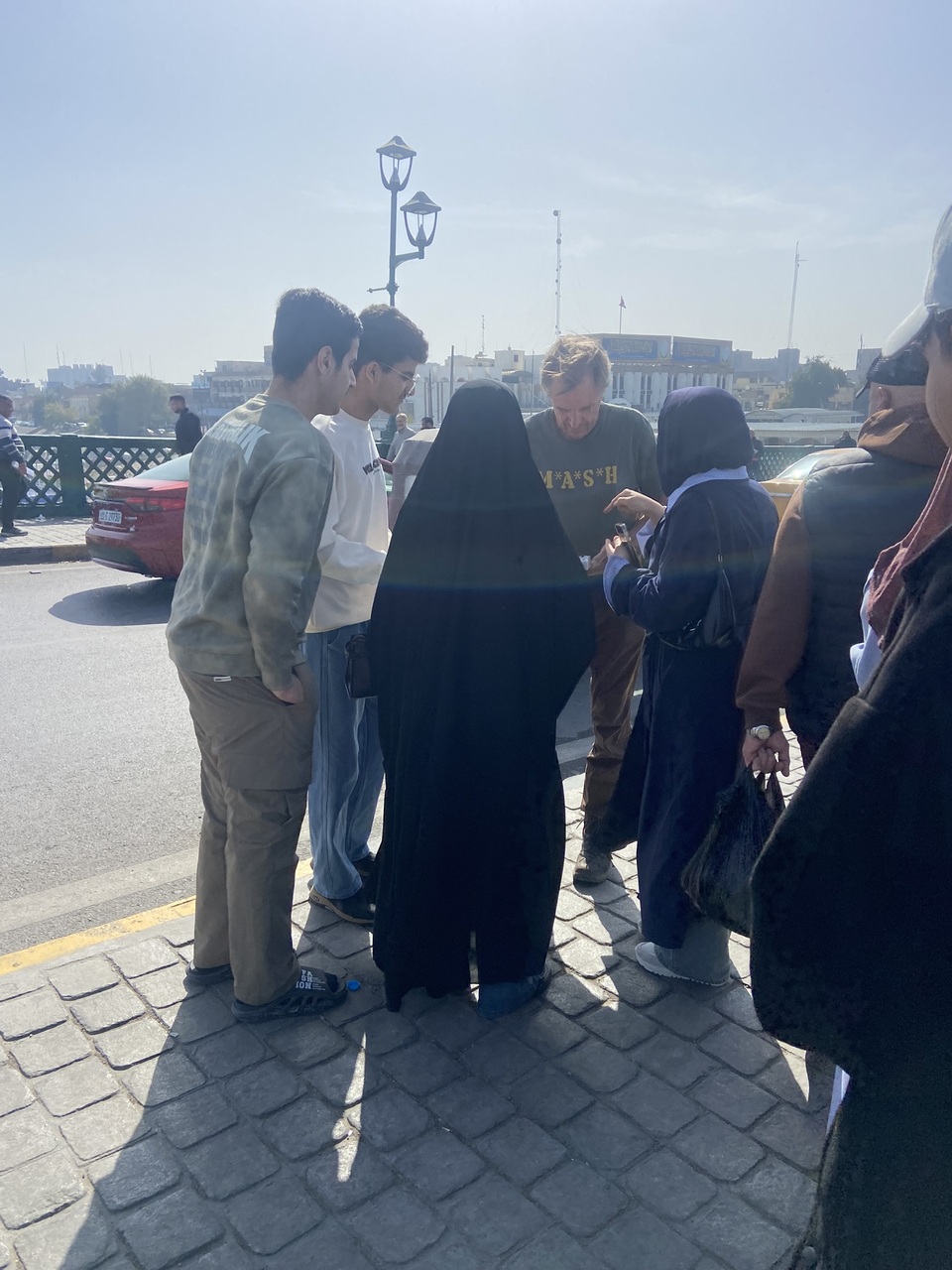
On Sunday, we head into Baghdad. It is not the city, but the people who stand out. Because of their openness. Their warm naturalness. Many passers-by welcome us to Iraq. We feel as if we are not strangers here, but merely late arrivals. People ask to have their picture taken, selfies are taken, short conversations are struck up. The contact is light, but not superficial. The Iraqi people have had the Americans ‘visit’ twice (for the liberation of Kuwait and later to search for weapons of mass destruction) and have lived under the yoke of the Caliphate. Perhaps the presence of tourists is proof of normalization.
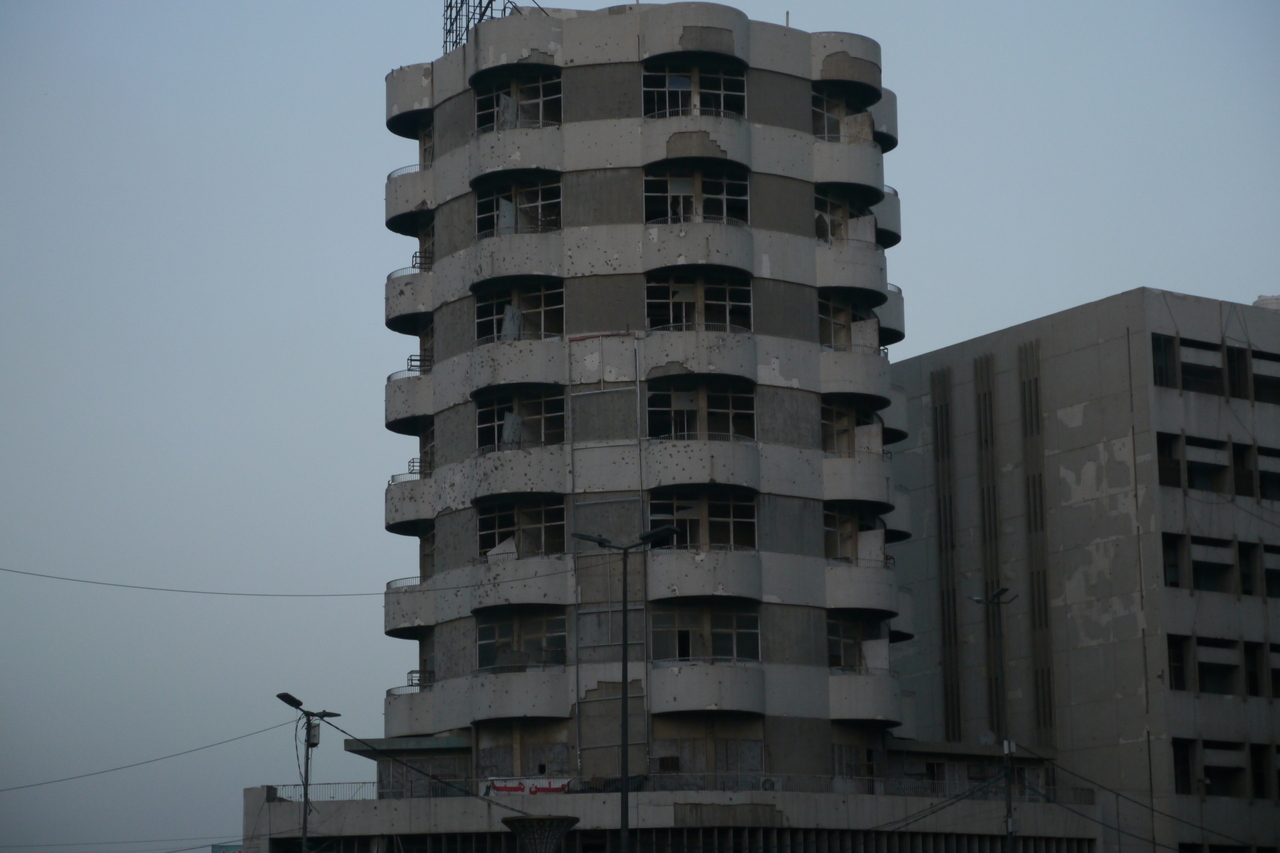
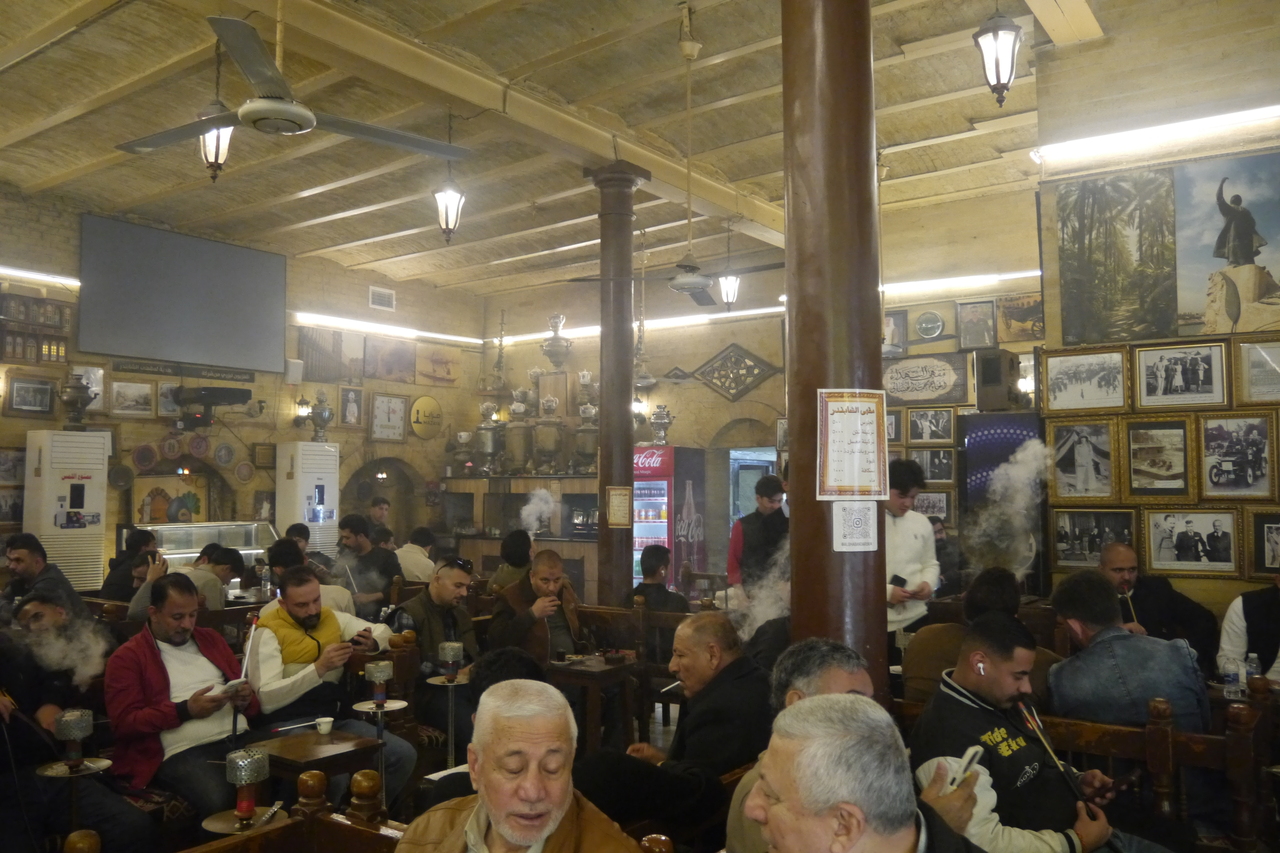
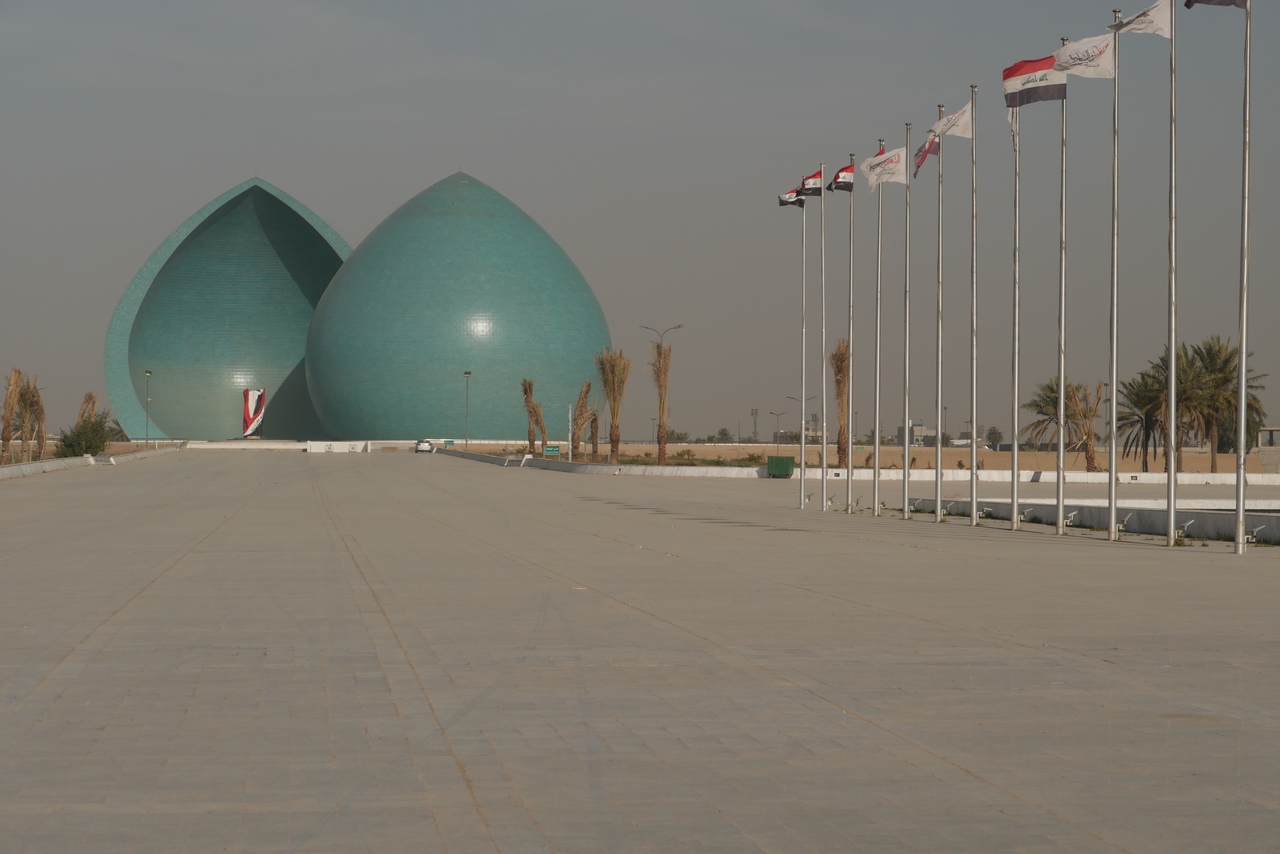
We stroll through the book market (Al Mutanabbi Street) and drink tea in the Shabander café, an old teahouse where mainly men sit smoking shisha (water pipe). We stand on the outskirts of the city for hours in traffic jams in front of the national museum and the Martyr's Monument (commemorating the Iran-Iraq war) – only to find that both are closed. The disappointment is hardly felt. We found what we were looking for elsewhere.
We decide to continue our journey towards Turkey before the unrest surrounding Kurdistan's right to exist (in Syria) spreads here again. We stop in Mosul, a city that has borne more than its share of history. Here too, the attitude of the people touches us more deeply than expected.
An old black Mercedes cuts us off. Four excited boys get out, along with their father. Their smiles are broad, their enthusiasm unbridled. Can they take photos? Would we like to come to their house—for tea, for a meal, to stay the night? We accept the invitation for tea and end up in a warm living room where time loses its meaning for a moment. The fourteen-year-old son fires off questions at us, in broken English and with the help of Google Translate. His curiosity is disarming. This encounter nestles quietly in me, without warning, but forever.
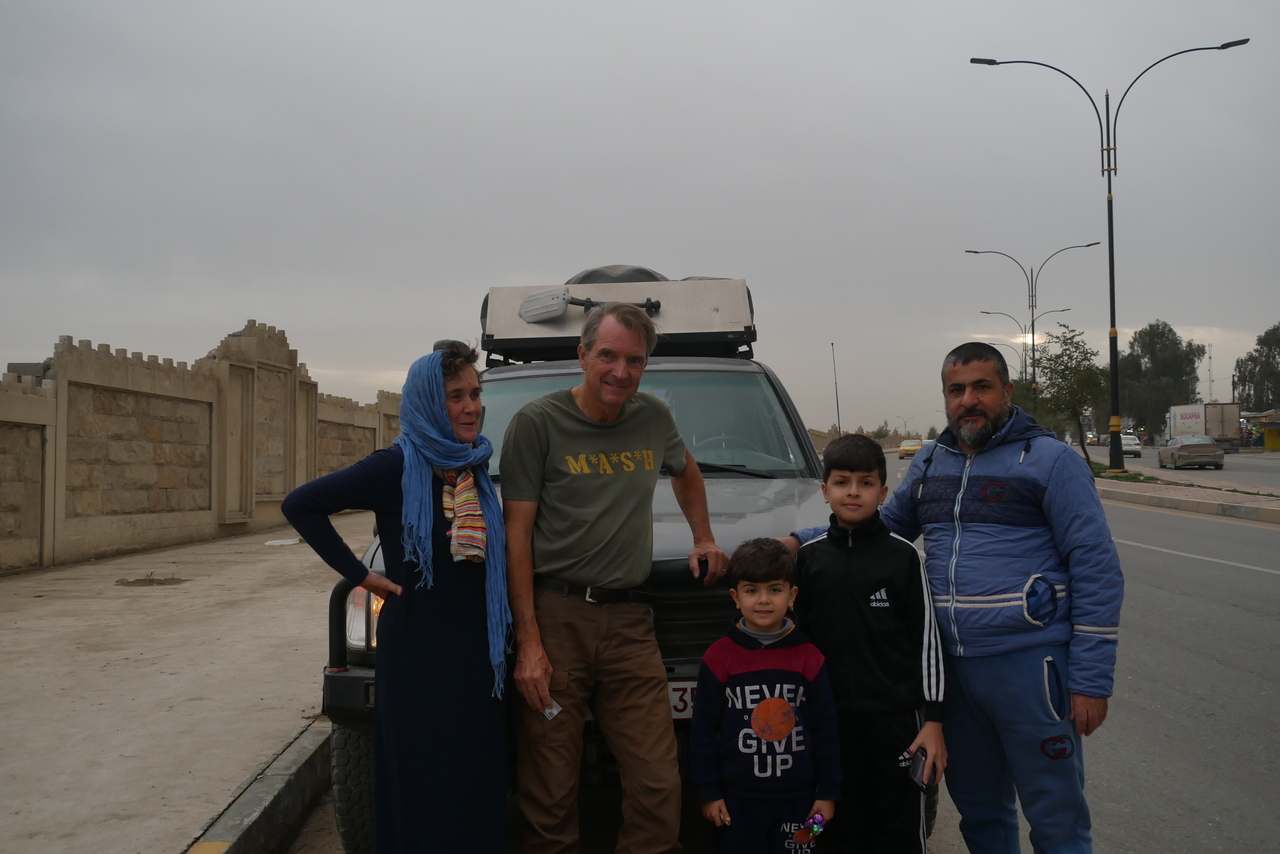
The next day we walk through Mosul. The traces of ISIS destruction cannot be ignored: rubble, open wounds, emptiness. And yet, once again, there is only kindness. Greetings. Eye contact. A smile, a conversation.
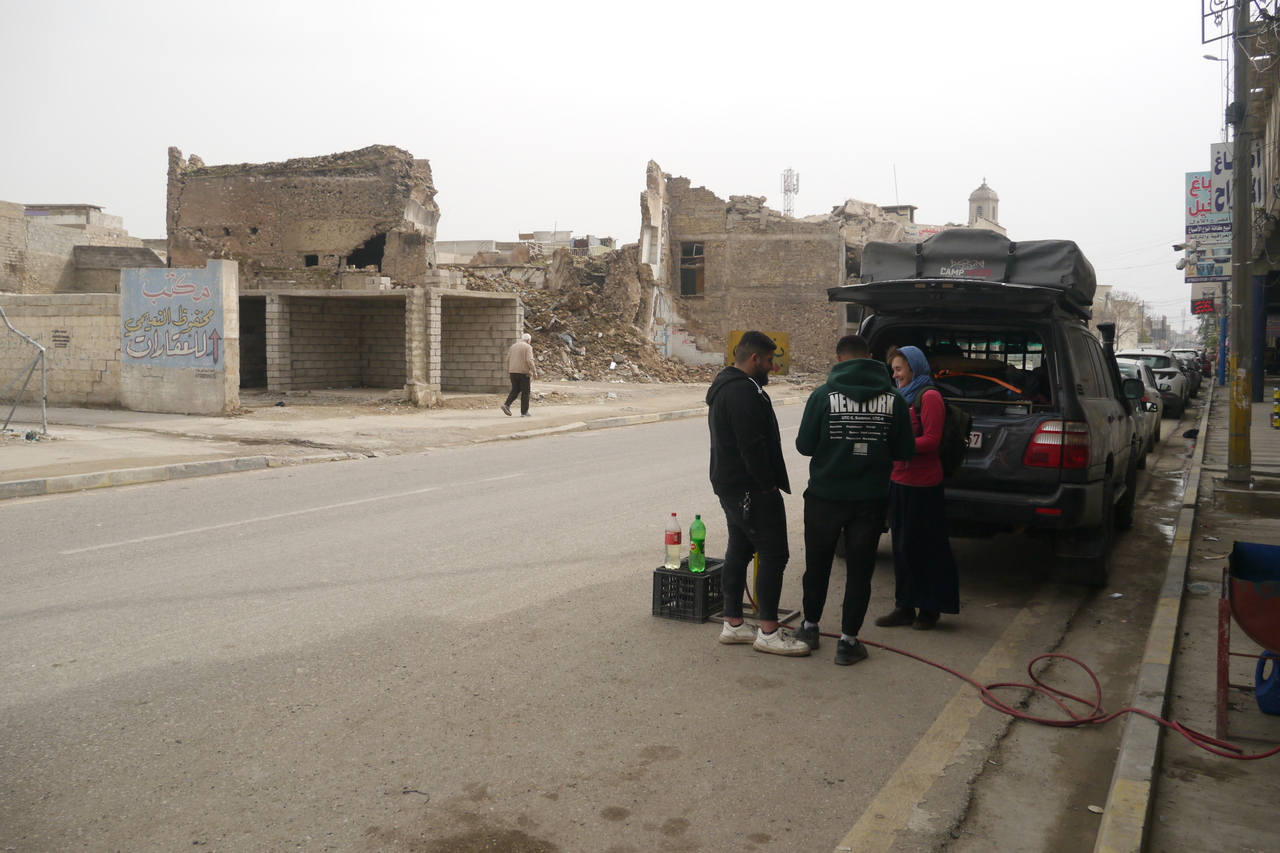
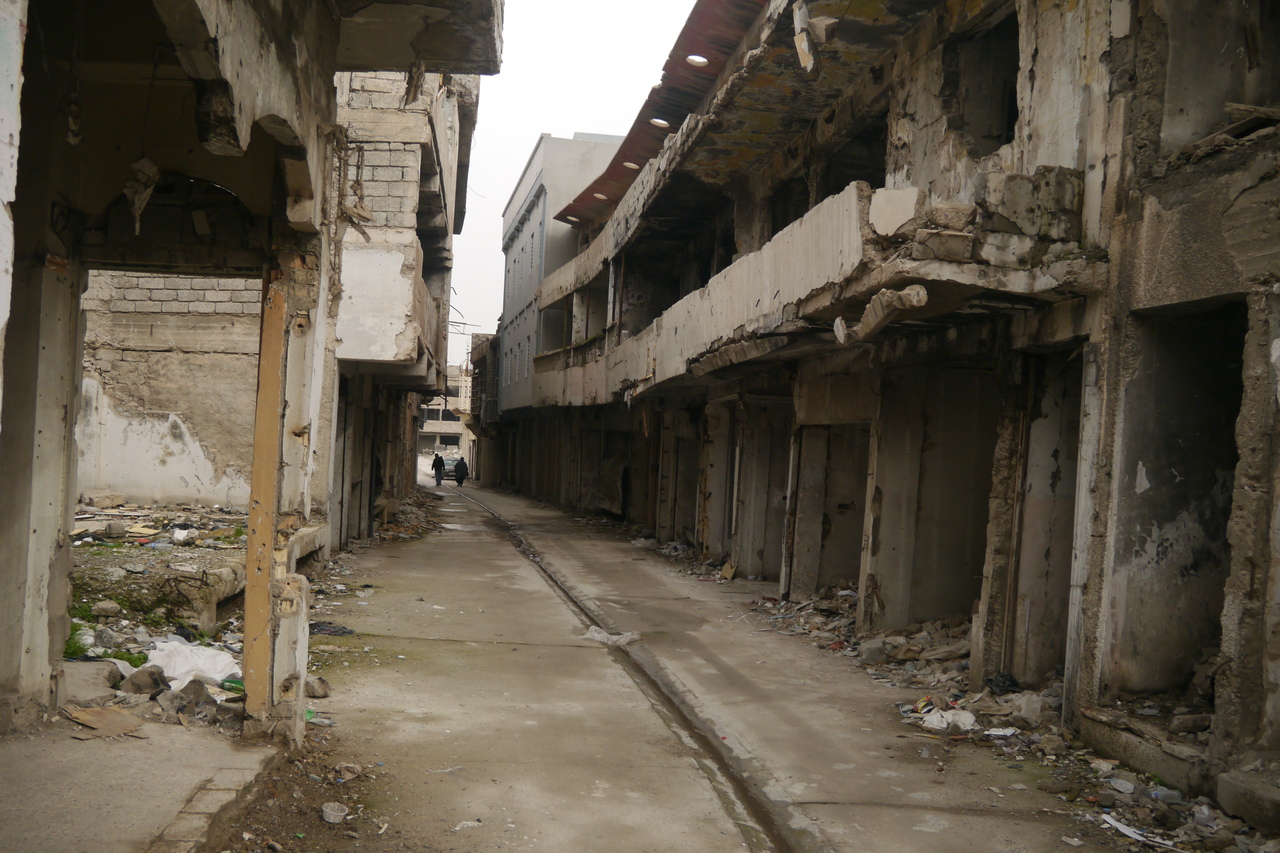
Perhaps that is what stays with me the most. Not the chaos, not the destruction, not the uncertainty. But a people who, despite everything, choose openness. I will always remember the Iraqi people with a smile.
And so we arrive in Turkey. We will traverse the country. The temperatures are dropping, so we travel differently than usual: from hotel to hotel, seeking shelter from the cold. Yet nature continues to impose itself. Snow-capped mountain peaks stand out against the sky. It is beautiful. Everything here feels strikingly Western—familiar, almost reassuring, after what we have left behind.
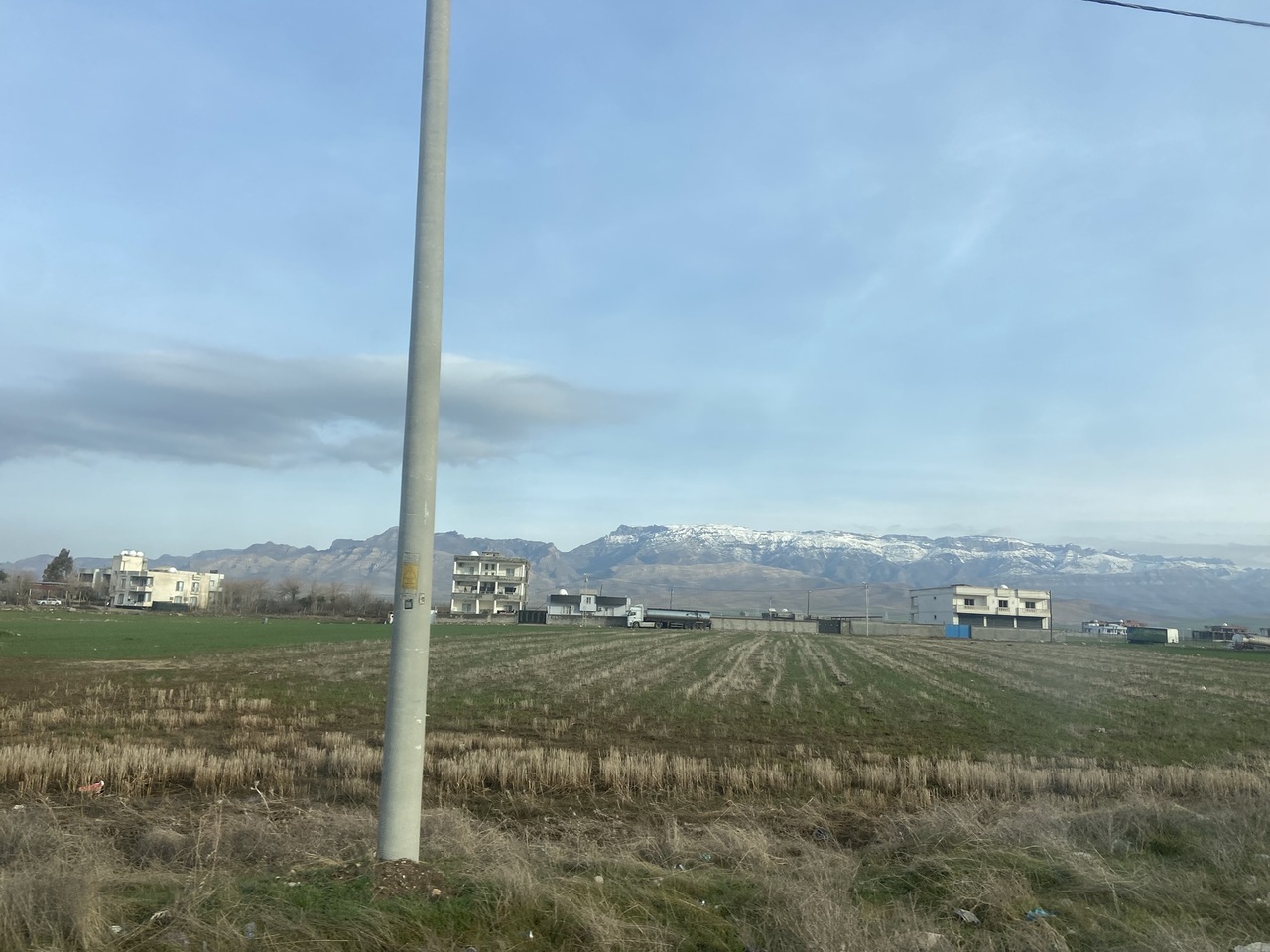
After a second long day, we reach Osmaniye. The hotel I had chosen has no rooms available. The manager shakes his head: we won't find anything else in this area, he says, everything is fully booked. His words sound decisive, almost unshakeable: tomorrow is the anniversary of the earthquake that struck here three years ago. Fifty thousand people died, entire neighborhoods were wiped out. Suddenly, the pieces of the puzzle fall into place. Rows of inhabited containers and even tents that we saw along the way. The endless new construction. What at first seemed like progress turns out to be a form of survival, of starting over. The landscape here bears not only snow, but also memories. And we drive through it, as temporary witnesses.
Meanwhile, the birth of our first grandchild seems to be coming a little earlier than expected. I book a flight to Belgium. Adriaan will do the last stages, including a forty-hour boat trip, on his own. The end of this journey comes a little suddenly—I still have to get used to it. But there is always a “next” one... See you then!
